
How do I remove calcium buildup from my pool tile?

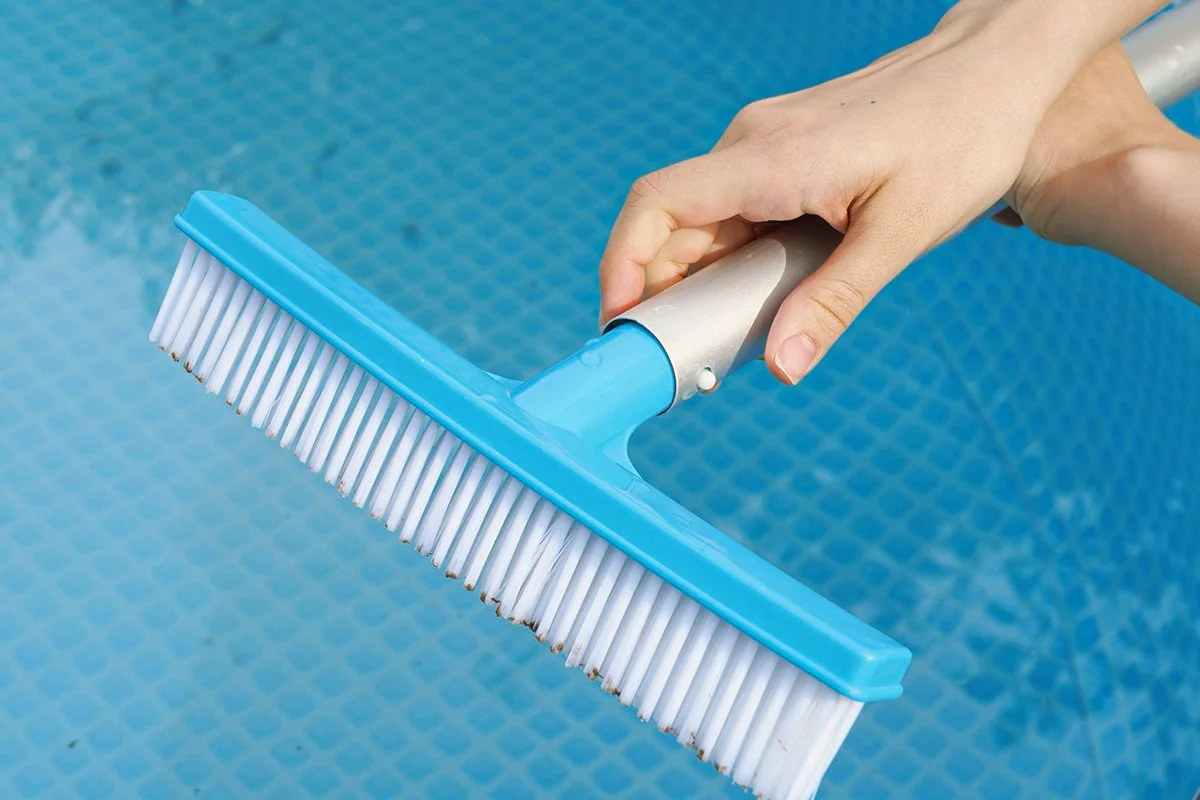
Brushing will not remove calcium buildup once it has hardened into scale, because at that point the deposit is chemically bonded to the tile surface, not sitting on top of it. Removing hardened calcium requires a descaling treatment, typically an acid based solution applied directly to the tile, followed by hand scrubbing to lift the mineral layer without damaging the grout or finish underneath. If you have been brushing the same white haze for weeks with no change, the deposit has already moved past the stage brushing can fix.
Tampa's water tends to run harder than other parts of Florida, and August's accelerated evaporation concentrates minerals in the water even further as the pool loses volume faster than usual. That combination is exactly what pushes calcium from a light film into a hardened scale layer along the waterline tile.
What is calcium buildup, and why does it collect on tile?
Calcium buildup happens when calcium carbonate or calcium silicate, minerals naturally present in pool water, come out of solution and deposit on surfaces, most visibly along the waterline tile where evaporation concentrates minerals fastest. Calcium carbonate deposits appear white and flaky and are easier to remove. Calcium silicate deposits are gray or brown, bond more tightly, and require a more aggressive descaling process.
Why does brushing stop working after a certain point?
Brushing removes calcium while it is still a loose film on the surface. Once the mineral crystallizes and bonds to the tile's texture, brushing only polishes the surface of the deposit without lifting it. This is the same distinction as preventive tile brushing versus restorative tile cleaning: one is routine upkeep, the other is a chemical process to reverse buildup that has already set.
What makes calcium harden faster in August?
High evaporation concentrates minerals in the remaining water, since the water leaves but the calcium does not. Combined with elevated pool temperatures and higher pH from summer chemical demand, calcium comes out of solution more readily in August than in cooler months. A pool that shows no scale in April can develop a visible waterline ring by late summer if water hardness is not being monitored.
What happens if calcium deposits are left untreated?
Left alone, hardened calcium continues to build in layers, making eventual removal more labor intensive and, in severe cases, requiring more aggressive acid treatments that carry more risk to tile grout and finish. Beyond appearance, high water hardness that drives calcium buildup can also contribute to cloudy water and rough texture on plaster or pebble finishes.
How does Venezia restore calcium affected tile in Tampa?
Venezia's restorative tile cleaning combines a targeted acid descaling solution with hand detailing along the waterline, calibrated to the type of calcium deposit and the tile material to avoid damaging grout or glaze. This is paired with a water hardness check, since removing the visible deposit without addressing the water chemistry behind it means the buildup returns within weeks.
Frequently asked questions
What is a safe water hardness range to prevent calcium buildup? Calcium hardness is generally recommended between 200 and 400 ppm for plaster pools. Levels consistently above that range increase the risk of scale formation on tile and equipment.
Can I remove calcium buildup myself with vinegar or store bought cleaners? Mild household acids can sometimes lift light films, but hardened calcium scale typically requires a professional grade descaling solution and technique to avoid damaging tile or grout.
Will calcium buildup come back after it's removed? It can, if the water hardness that caused it isn't corrected. Addressing the underlying chemistry is what prevents the deposit from reforming.
Is calcium buildup a sign of a bigger pool problem? Not on its own, but persistent buildup paired with cloudy water or rough plaster texture can indicate water hardness has been out of range for an extended period.
Enjoy your pool stress-free. >>>
Let our experts handle the rest.
Enjoy your pool stress-free. >>> Let our experts handle the rest.
If brushing hasn't touched the buildup on your tile,
to schedule restorative tile cleaning.

