
What Florida's rainy season actually does to your pool in Sarasota
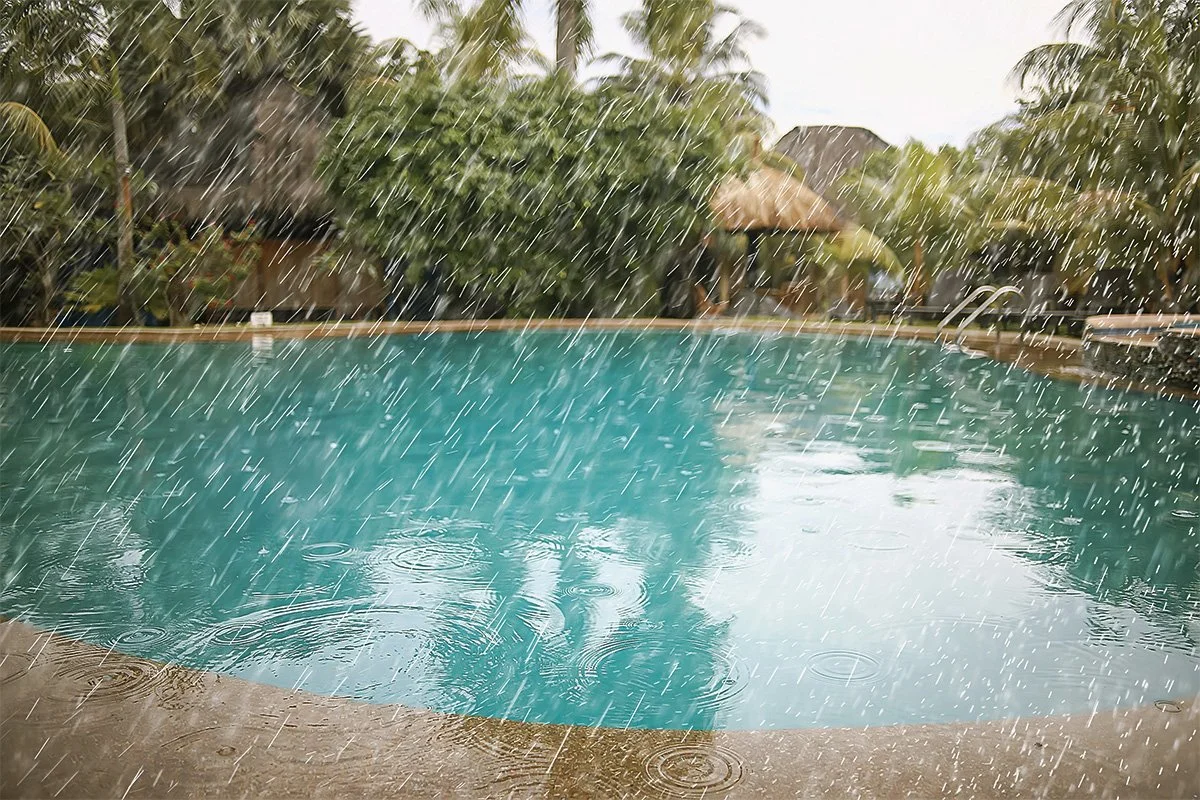
June arrives in Sarasota and the afternoon storms start like clockwork. Ninety minutes of heavy rain, then sunshine, then humidity you can feel. Most homeowners look at a pool after a storm and think: it looks fine.
What they cannot see is what happened to the water.
Florida's rainy season (June through September) is the single most disruptive period for pool chemistry in the year. Not because of dramatic events, but because of slow, cumulative dilution that compounds week after week if it goes uncorrected.
Rain is not just water
Here is the part most homeowners do not realize: rainwater is not neutral. It is slightly acidic, with a pH that typically falls between 5.0 and 5.6, well below the 7.4 to 7.6 range your pool needs to be safe and clear.
Every inch of rain that falls into your pool lowers your pH and dilutes your sanitizer. In Sarasota, June averages between 8 and 10 inches of rain. That is not a single storm. That is weeks of steady chemistry drift.
What happens when this goes uncorrected:
pH drops. Acidic water irritates eyes and skin. It also accelerates corrosion on metal fittings, ladders, and pool equipment. Left low for extended periods, it attacks the pool surface itself.
Chlorine loses effectiveness. Even if your chlorine level reads normal, effectiveness is determined by a combination of chlorine concentration and pH. At pH 6.8, roughly 65% of your chlorine is active. At 7.5, you get over 90%. The same chlorine level protects you very differently depending on where your pH sits.
Alkalinity falls. Total alkalinity acts as a pH buffer. It is what keeps small fluctuations from becoming large swings. Rain dilutes it steadily. Once alkalinity drops below 80 ppm, pH becomes unstable and difficult to control.
Algae finds its window. Diluted chlorine plus disrupted pH equals an environment where algae establishes fast. In Sarasota's summer temperatures, algae can bloom in 24 to 48 hours under the right conditions.
The compounding effect nobody talks about
One afternoon storm is manageable. Five weeks of twice-weekly rain is something else.
The problem with rainy season chemistry is that each storm compounds the one before it. If you are not testing and adjusting after each significant rainfall event, you are not maintaining a pool. You are gradually losing control of one.
By July, homeowners who skipped corrective chemistry in June are often dealing with chronically cloudy water, stubborn algae problems, or damaged equipment. All traceable back to ignored pH and alkalinity drift.
What proper summer maintenance looks like
Keeping a Sarasota pool in balance through rainy season requires more than a weekly chemical routine. It requires testing after significant rain events, not just on a fixed schedule.
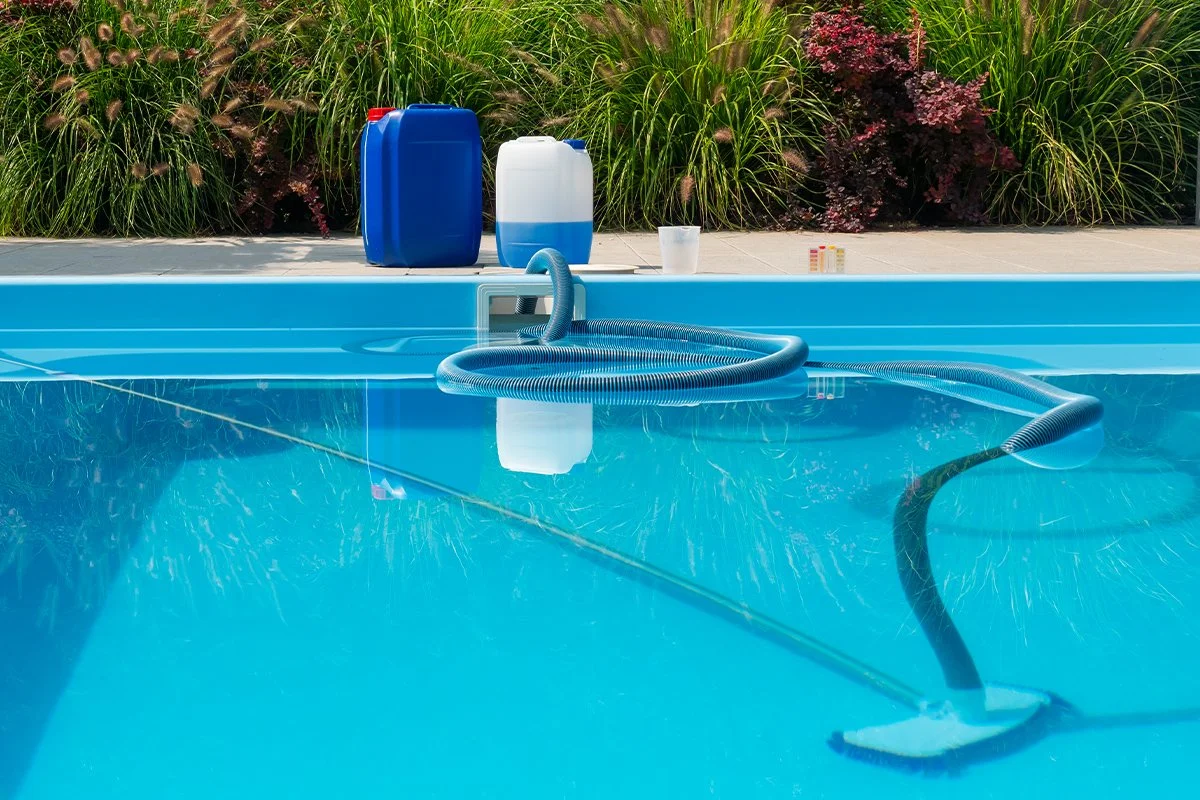
Every visit should include full panel testing: chlorine, pH, total alkalinity, stabilizer (CYA), and calcium hardness. Adjustments need to be made in the right sequence: alkalinity first, then pH, then sanitizer. Correcting pH without first stabilizing alkalinity is one of the most common mistakes that leads to pH bouncing back within days.
Stabilizer levels also need monitoring. CYA protects chlorine from UV degradation. In Florida's summer sun, without adequate stabilizer (ideally 40 to 80 ppm), chlorine burns off within hours. Rain dilutes it the same way it dilutes everything else.
How Venezia Luxury keeps Sarasota pools in balance through summer
Venezia Luxury Services provides recurring pool maintenance for Sarasota homeowners, with chemistry management calibrated for Florida's specific seasonal conditions and not a generic weekly checklist.
Our technicians are CPO certified, fully licensed and insured, and FSPA members. We test all parameters, adjust in the correct order, and document what was found and corrected at every visit.
When your chemistry is managed properly through June, July, and August, you avoid the cascade: no algae, no equipment corrosion, no expensive corrective service at the end of summer.
Frequently asked questions
Does rain affect a saltwater pool the same way? Yes. A saltwater pool still uses chlorine, generated by the salt cell through electrolysis. Rain dilutes the salt concentration, disrupts pH, and lowers alkalinity the same way it does in a traditional chlorine pool. Salt cell output may also need to be adjusted as chemistry shifts.
How soon after rain should I test my pool? After any rainfall over half an inch, test as soon as possible, ideally within 24 hours. Waiting until the next scheduled service visit may be too long if back-to-back storms are in the forecast.
Enjoy your pool stress-free. >>>
Let our experts handle the rest.
Enjoy your pool stress-free. >>> Let our experts handle the rest.
Ready to stop chasing chemistry through Florida's rainy season?
Schedule professional pool service in Sarasota.

