
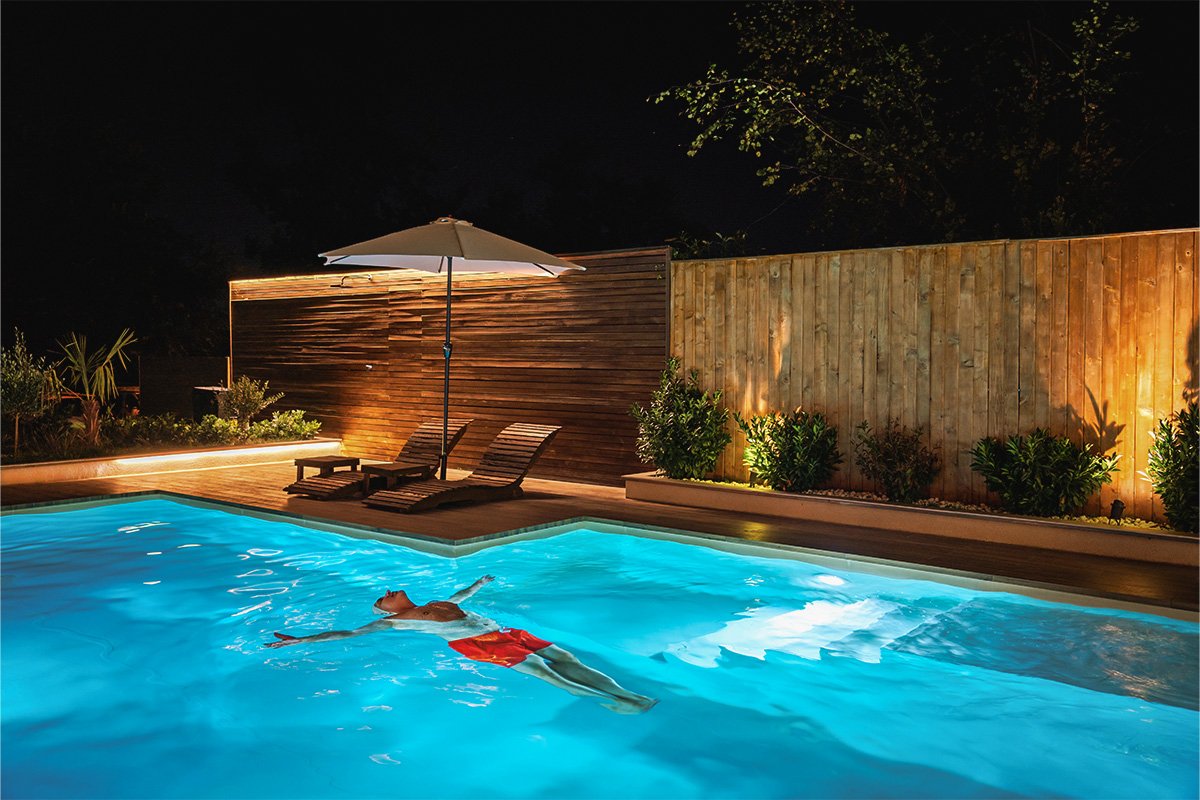
A pool light that flickers, dims, or goes dark gets treated like a minor inconvenience by most homeowners in St. Petersburg, something to deal with eventually. That is the wrong way to think about it. A failing pool light is a safety issue first and a cosmetic one second, and waiting to address it carries more risk than most people realize.
The problem in detail: what a failing light actually means
Pool lights fail for a handful of reasons: a burned out bulb, a cracked or degraded lens gasket letting water into the fixture, corroded wiring in the niche, or a failing transformer that powers the whole system. Each of these looks the same from the surface, a light that will not turn on or that flickers unpredictably, but they require very different fixes.
The gasket failure is the one that matters most. Once water gets past a compromised seal and into the light housing, the electrical components inside are exposed to moisture in a fixture that sits underwater. This is not just a bulb replacement anymore, it is an electrical safety concern that needs a proper inspection before the light is used again.
Why this is a bigger deal at night than it looks
Underwater lighting is not decorative in a functioning pool, it is how swimmers see depth changes, steps, and each other after dark. A dead or dim light turns a normal night swim into a guessing game, particularly for older family members or guests unfamiliar with the pool's layout, a real concern for the safety conscious households St. Petersburg is full of.
There is also a compliance angle. Many municipalities and HOAs require functioning pool lighting for any pool used after sunset, and for commercial or rental properties, an inoperable light can create liability exposure that goes well beyond the cost of the fix itself.
What St. Petersburg homeowners should know before deciding
A single bulb replacement is a reasonable fix if the fixture itself is sound and the failure is recent and isolated. But if the light is more than a few years old, has failed more than once, or shows any sign of water intrusion, repair is usually a short term patch on a problem that will return.
This is also the point where an upgrade makes sense. LED pool lights use a fraction of the energy of older incandescent or halogen fixtures, run cooler, and last significantly longer, which matters if the niche or wiring needs attention anyway. Replacing the fixture at that point, rather than only the bulb, avoids paying for the same repair twice.
How long a pool light actually lasts
Most incandescent and halogen pool light bulbs last one to two years under regular use, while the fixture itself, the housing, gasket, and wiring, can last considerably longer if it is never exposed to water intrusion. LED fixtures push bulb life out to five years or more, which is part of why replacing an aging fixture rather than only the bulb often makes sense over the life of the pool.
Homeowners who have owned their pool for eight to ten years without ever replacing the fixture itself, only the bulb, are often the ones we find with the most seal wear once we finally inspect it.
What this means for commercial and rental properties
For HOA managed communities, short term rentals, and hotel pools, a non-functioning light is not just an inconvenience for one household. It affects every guest or resident using the pool after dark, and it is one of the first things an inspector or insurance adjuster will note if an incident occurs near the pool at night.
We work with property managers to inspect lighting on a fixed schedule rather than waiting for a tenant or guest complaint, which is generally the more expensive way problems like this get discovered. A short, documented inspection on a recurring basis is a far simpler process than responding to a complaint after a guest has already had a bad experience in the dark, and it protects the property owner just as much as the guest.
How Venezia helps
Our CPO certified technicians inspect the full fixture, not just the bulb, checking the gasket seal, the niche wiring, and the transformer before recommending a repair or a replacement. If water has reached the housing, we address that before anything else goes back in the water.
When an upgrade is the right call, we install LED fixtures sized correctly for your pool, so you get reliable, code compliant lighting without paying for more than the space actually needs. Working on electrical components in or near water requires more than general handyman experience. It requires licensing that accounts for the specific risk profile of submerged wiring, which is exactly what our technicians carry into every inspection.
Frequently asked questions
Is a flickering pool light dangerous? It can be. Flickering often points to a failing transformer, a loose electrical connection, or water intrusion into the fixture, any of which should be inspected before the light is used again. It is not something to leave for later.
Should I repair my pool light or replace it with LED? If the fixture is sound and the failure is isolated, a repair is often enough. If the light is older, has failed before, or shows signs of water intrusion, an LED replacement usually makes more sense since it solves the underlying issue and lowers energy use going forward.
Enjoy your pool stress-free. >>>
Let our experts handle the rest.
Enjoy your pool stress-free. >>> Let our experts handle the rest.
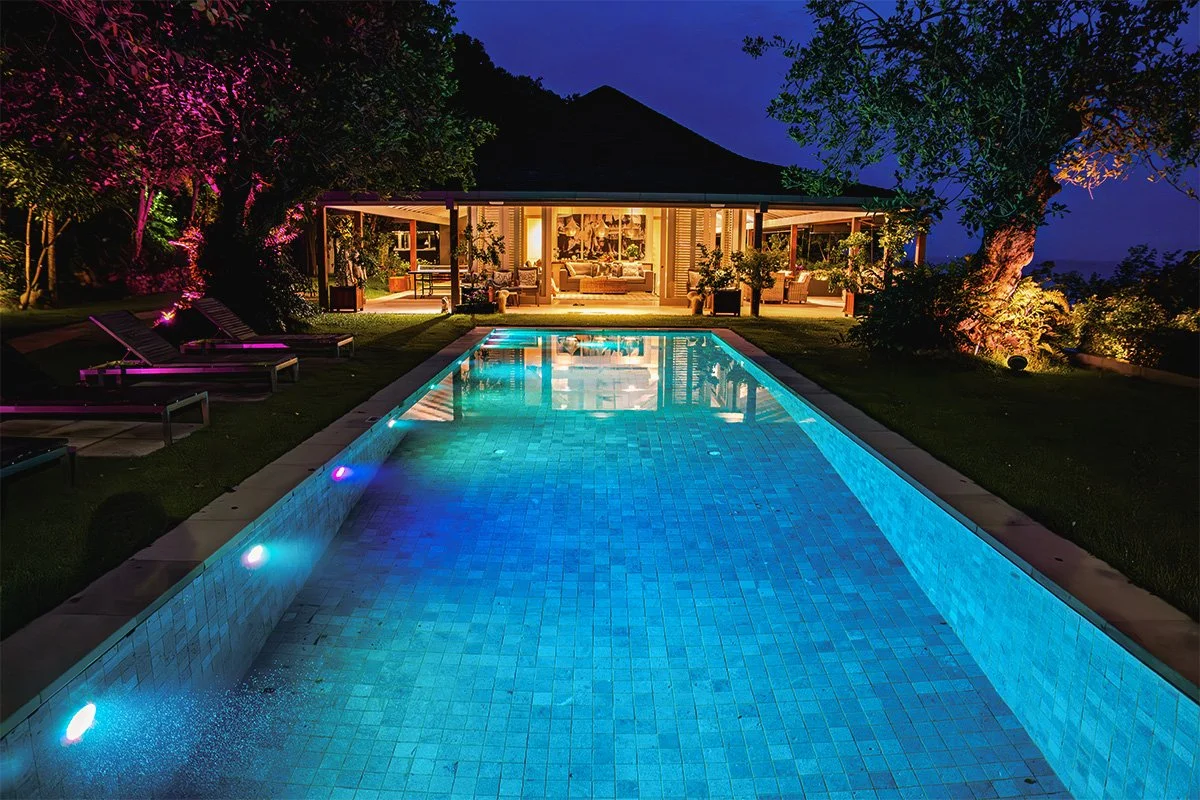
A pool light is easy to ignore until someone is swimming in the dark. If yours is flickering, dim, or already out,

