
What a Florida pool looks like after 30 days without professional service
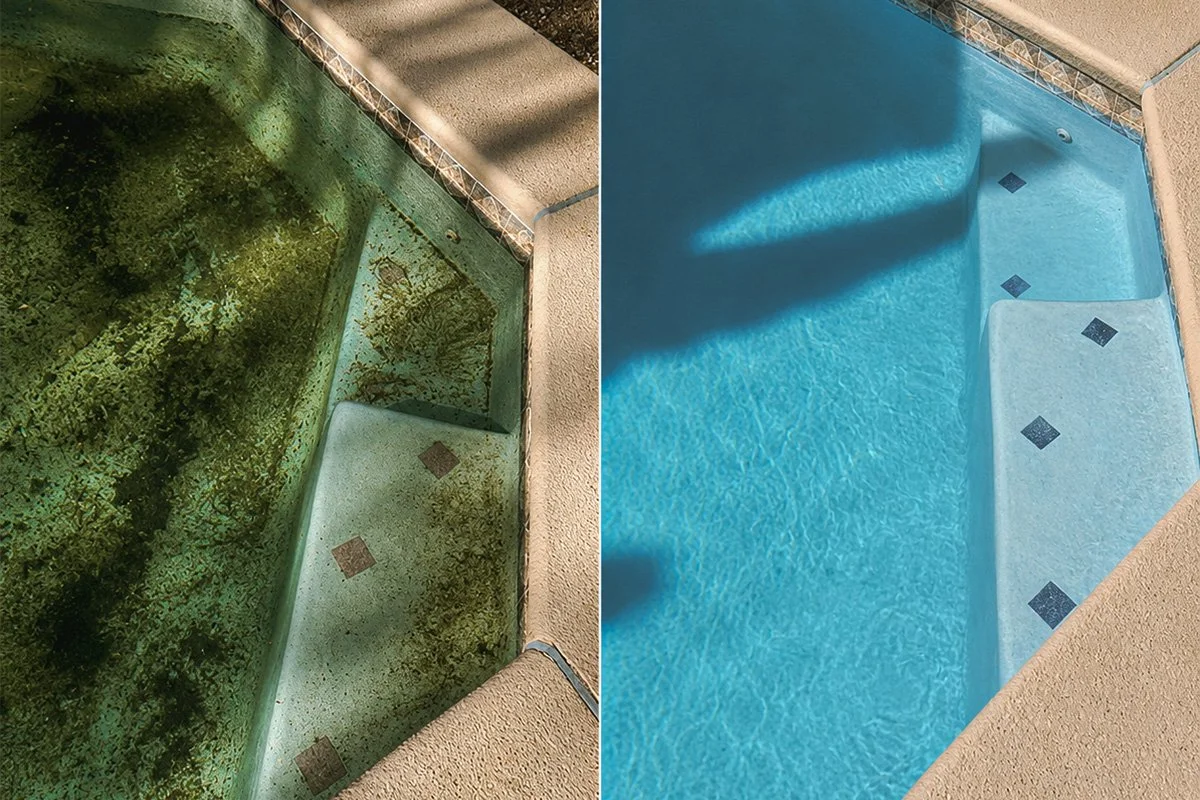
Venezia technicians see this pattern often enough to describe it almost to the day: a pool that looked completely normal a month ago, sitting untouched through a Florida summer, and the specific, predictable sequence of problems that follows. It does not take neglect or a major event. It takes exactly one missed month.
Week one: the changes nobody notices yet
In the first week without service, nothing looks different. Chlorine is still doing its job, though it is breaking down faster than usual in the heat without anyone adjusting the dose. pH and alkalinity begin drifting from their ideal ranges, quietly and invisibly, while the pump keeps running on whatever schedule it was last set to, regardless of whether that schedule still matches the season.
Week two: the water starts to tell the story
By the second week, chlorine has typically fallen below the 1 to 3 ppm range that keeps algae in check, and Florida heat does not leave much margin for error once that happens. The water often takes on a faint dullness, not yet green, but noticeably less clear than a well maintained pool. Filters are working harder to compensate, and debris that would normally be skimmed daily starts to accumulate on the surface and in corners.
This is also when algae gets its foothold. Algae spores are present in essentially all outdoor water in Florida, and they only need a window of low chlorine and warm temperatures to establish themselves. Two weeks without proper treatment is usually enough of a window.
Weeks three and four: the visible tipping point
This is where the pool most homeowners picture when they imagine neglect actually appears. Algae blooms turn the water green or cloudy, tile lines pick up a biofilm ring at the waterline, and the deck around the pool often shows early staining from organic buildup. What started as a chemistry problem is now visibly a different pool.
The equipment has not been idle either. A pump running on the wrong schedule, combined with a filter clogged from a month of uncollected debris, works harder for worse results. This is the point where restoration usually requires a full Green to Clean process, including draining and, in more advanced cases, an acid wash, rather than a simple shock treatment.
Why this matters more than most homeowners expect
The frustrating part of this timeline is how avoidable it is. None of these four weeks required a storm, an equipment failure, or anything dramatic. It only required a normal Florida summer and the absence of a consistent maintenance schedule, weekly or biweekly, doing its job in the background.
This is also why Venezia structures comprehensive maintenance the way it does, with a technician on site on a fixed schedule rather than a reactive visit only when something looks wrong. By the time a pool "looks wrong" to an untrained eye, the chemistry has usually been off for at least two weeks already.
Why weekly and biweekly schedules interrupt this timeline
A weekly visit catches the chemistry drift described in week one before it has a chance to compound. A biweekly visit still catches most of it, though it leaves a slightly wider window where a particularly hot stretch or heavy pool use could push chlorine out of range between visits.
Neither schedule requires the homeowner to remember anything or test anything themselves. That is the actual value of comprehensive maintenance: the timeline in this article simply never gets the chance to start, because someone is checking the water and the equipment before day one turns into day thirty.
What this looks like from a technician's perspective
Technicians who service the same pool every week develop a feel for what is normal for that specific pool: its typical chlorine demand, how fast its pH tends to drift, how its equipment sounds when it is running well. That familiarity is part of why a consistent provider catches subtle changes that a one time inspection would miss entirely. The pattern rarely surprises our technicians. It follows the same chemistry and equipment logic every time, regardless of which Florida city the pool is in.
This is also why a homeowner returning from a few weeks away should treat the pool as a priority on day one, not day five. The earlier a technician sees the water after a gap in service, the earlier the timeline described above gets interrupted, and the less work it takes to bring the pool back to where it should be.
How Venezia helps
Our CPO certified technicians build every comprehensive maintenance visit around the same principle this timeline illustrates: chemistry and equipment need consistent, scheduled attention, not intervention after the fact. We test and balance chlorine, pH, alkalinity, and stabilizer every visit, inspect the pump and filter for early signs of strain, and catch the week one and week two problems before they ever reach week three.
Frequently asked questions
How quickly can a Florida pool turn green without maintenance? In peak summer heat, visible green or cloudy water can appear within two to three weeks of inconsistent chemical treatment, since algae spores are already present in most outdoor water and only need a window of low chlorine to take hold.
Is weekly or biweekly service enough to prevent this? For most residential pools in Florida, a consistent weekly or biweekly schedule keeps chemistry within safe ranges and catches equipment issues early. The right frequency depends on pool size, usage, and surrounding landscape, which a technician can assess directly.
Enjoy your pool stress-free. >>>
Let our experts handle the rest.
Enjoy your pool stress-free. >>> Let our experts handle the rest.

A month is all it takes. If your pool has gone longer than usual without professional attention,

